
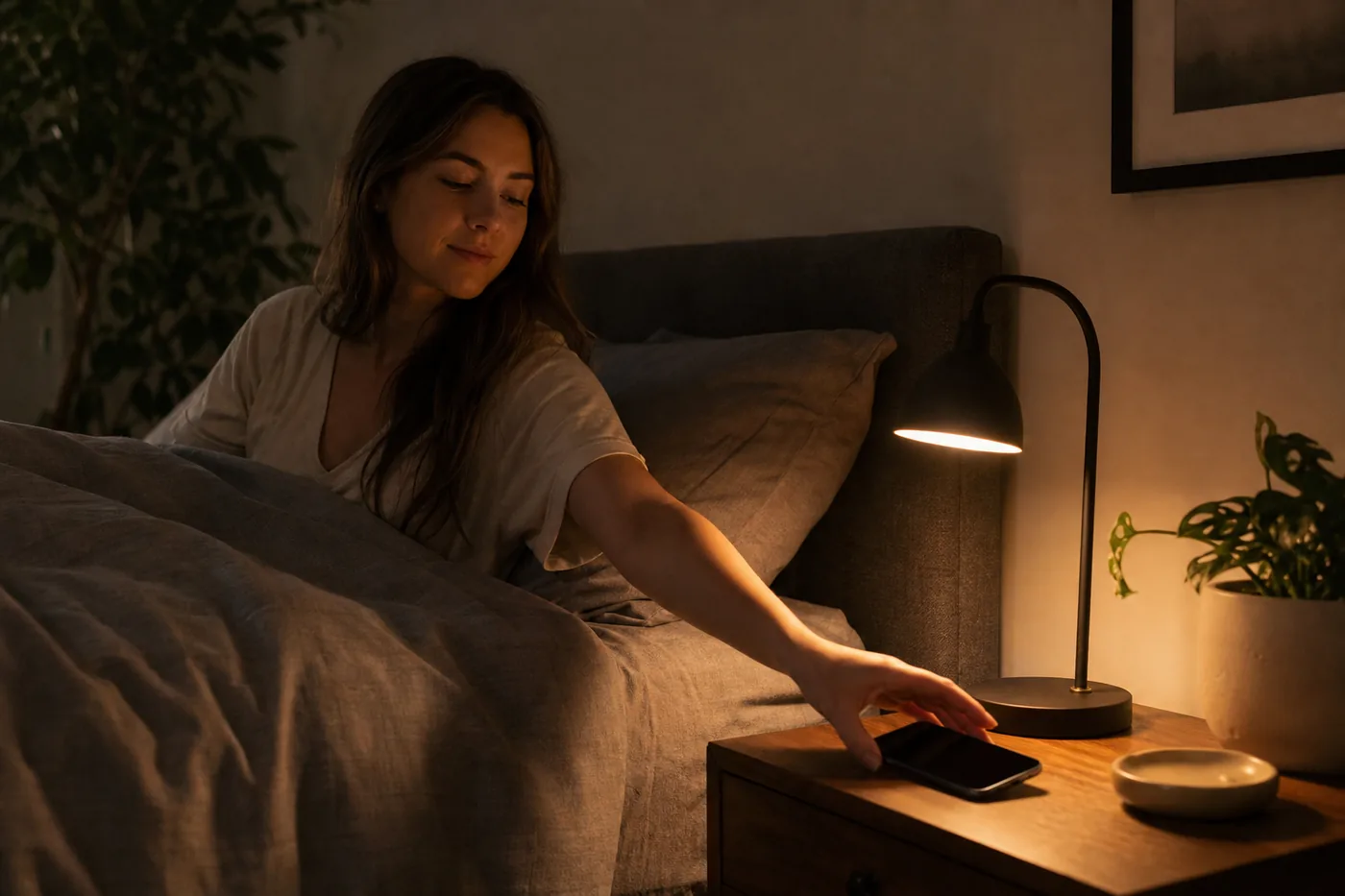
How Long Before Bed Should I Stop Screens?
A practical screen cutoff for better sleep — how late phone and laptop light keep the brain alert, plus a realistic wind-down that still works.
Screens delay sleep in two ways: light (especially bright LEDs) and arousal (news, chats, infinite scroll). Filters help the first problem more than the second.
A cutoff that works for most people
Default rule:
- Pick bedtime
- Stop interactive screens 60–90 minutes before
- If you wake at 3 a.m. or take forever to fall asleep, push to 2 hours
“Interactive” means phone, laptop, tablet with apps you tap. A dim TV across the room is usually less damaging than a bright phone in bed — but both are worse than a book or quiet audio.
Why late scrolling hits sleep
- Bright light can delay melatonin timing
- Notifications keep the nervous system “on call”
- Emotional content (work email, arguments, short video) raises alertness right when you need the opposite
Night mode is a small assist, not a free pass to scroll until lights-out.
A realistic wind-down (no monastery required)
T-90 to T-60
- Last work / social scroll ends
- Charge the phone outside the bed reach
- Dim house lights
T-60 to bed
- Shower, stretch, paper book, or calm audio
- Optional: magnesium glycinate if that is already in your stack — glycinate vs citrate
- Keep caffeine out of this window — caffeine cutoff guide
7-day test
- Fixed wake time
- Screen cutoff at 90 minutes
- Phone charges in another room
- Log: time to fall asleep, night wake-ups, morning mood
If sleep improves, keep the cutoff even when you “only check one thing.”
Bottom line
Stop interactive screens 60–90 minutes before bed — longer if sleep is fragile. Filters help; removing the phone from the pillow helps more.
Related: morning light · sunrise alarms
Health disclaimer: He4lsy content is educational and not medical advice. Consult a qualified professional for personal decisions.
Related articles

Ashwagandha KSM-66: Dose, Cortisol & Sleep
The main benefits of KSM-66 ashwagandha for stress, cortisol, sleep, and steady energy — plus a simple 600 mg protocol.
Ashwagandha Morning vs Evening: When to Take It
Should you take ashwagandha in the morning or evening? How KSM-66 timing fits stress, sleep, and a rhodiola morning stack.
Best Caffeine-Free Coffee Alternatives for Sleep
Chicory, barley, cacao, and other caffeine-free coffee swaps that keep the ritual without taxing deep sleep.