
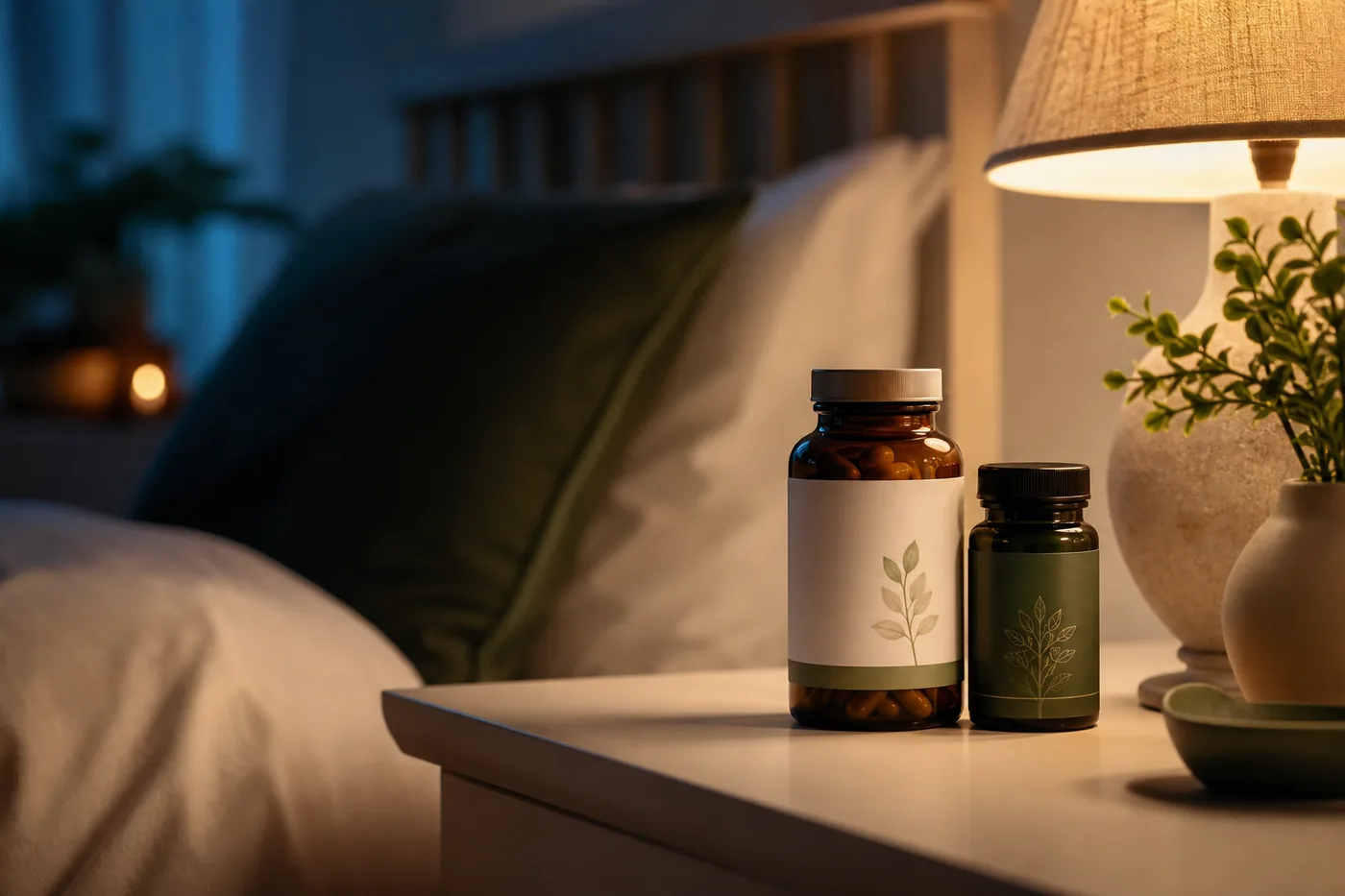
Magnesium Glycinate vs Citrate for Sleep
Which magnesium form fits sleep better — glycinate or citrate — plus dose timing, stomach tolerance, and a simple two-week test.
Both magnesium glycinate and magnesium citrate show up in sleep conversations. They are not interchangeable. The form changes tolerance, bathroom effects, and how useful the bottle is at night.
Quick comparison
| Glycinate | Citrate | |
|---|---|---|
| Best for | Wind-down / sleep stacks | Constipation + magnesium needs |
| Stomach | Usually gentler | Can loosen stools |
| Night use | Common first pick | Fine if you tolerate it |
| Feel | Calmer evenings for some | Less “sleep-specific” |
Magnesium glycinate — why sleep people pick it
Glycinate binds magnesium to glycine. Many people choose it because:
- Better digestive comfort than oxide / some citrates
- Fits an evening routine without a bathroom surprise
- Pairs cleanly with sleep basics (light, caffeine cutoff)
It is still not a knockout pill. Expect modest help if magnesium intake was low — not a cure for insomnia.
Deep dive: Magnesium glycinate for sleep
Magnesium citrate — when it makes sense
Citrate is more of a digestive + magnesium form. Useful if you also want stool support. For pure sleep goals, that effect can be a downside at 10pm.
Pick citrate if:
- constipation is part of the problem
- glycinate feels inert after a fair trial
- your clinician prefers that form
Practical evening protocol
- Choose one form for 14 days
- Take 200–400 mg elemental magnesium 30–60 minutes before bed
- Keep wake time and caffeine cutoff stable
- Log: sleep latency, night wake-ups, morning gut comfort
If stools become urgent, drop dose or switch toward glycinate.
Compare magnesium glycinate on Amazon
Bottom line
For sleep-first use, start with glycinate. Keep citrate when bowels need help more than wind-down. Form choice matters as much as the word “magnesium” on the label.
Health disclaimer: He4lsy content is educational and not medical advice. Consult a qualified professional for personal decisions.
Related articles
Ashwagandha KSM-66: Dose, Cortisol & Sleep
The main benefits of KSM-66 ashwagandha for stress, cortisol, sleep, and steady energy — plus a simple 600 mg protocol.
Ashwagandha Morning vs Evening: When to Take It
Should you take ashwagandha in the morning or evening? How KSM-66 timing fits stress, sleep, and a rhodiola morning stack.

Best Caffeine-Free Coffee Alternatives for Sleep
Chicory, barley, cacao, and other caffeine-free coffee swaps that keep the ritual without taxing deep sleep.