

Caffeine Cutoff for Deep Sleep: Why 4pm Coffee Still Hits
Caffeine blocks adenosine for hours. Why a late coffee can cut deep sleep even if you fall asleep on time — plus caffeine-free alternatives that keep the ritual.
Caffeine blocks adenosine receptors for about 5–6 hours. That matters for deep sleep: a late dose can still reduce slow-wave sleep even when you fall asleep on time.
A useful mental model from sleep physiology discussions: ~100 mg at 4pm can cut deep sleep by around ~30% for some people — even with a 10pm bedtime. Numbers vary by body weight, genetics, and tolerance, but the direction is consistent: afternoon caffeine is not “gone by bedtime.”
The cutoff that actually works
Adenosine builds while you are awake and helps drive sleep pressure. Caffeine does not remove adenosine; it occupies the receptors, so the brain under-reads how tired you are.
Practical rule:
- Pick your target bedtime.
- Cut caffeine 8 hours before that time.
- Example: sleep at 10pm → last coffee by 2pm.
- If you are a slow metabolizer or a light sleeper, push the cutoff earlier (closer to noon).
Falling asleep is not the whole story. You can drop off and still lose deep sleep quality.
Alternatives without the adenosine tax
Want the ritual without the 4pm sleep tax? Use options that do not block adenosine the same way.
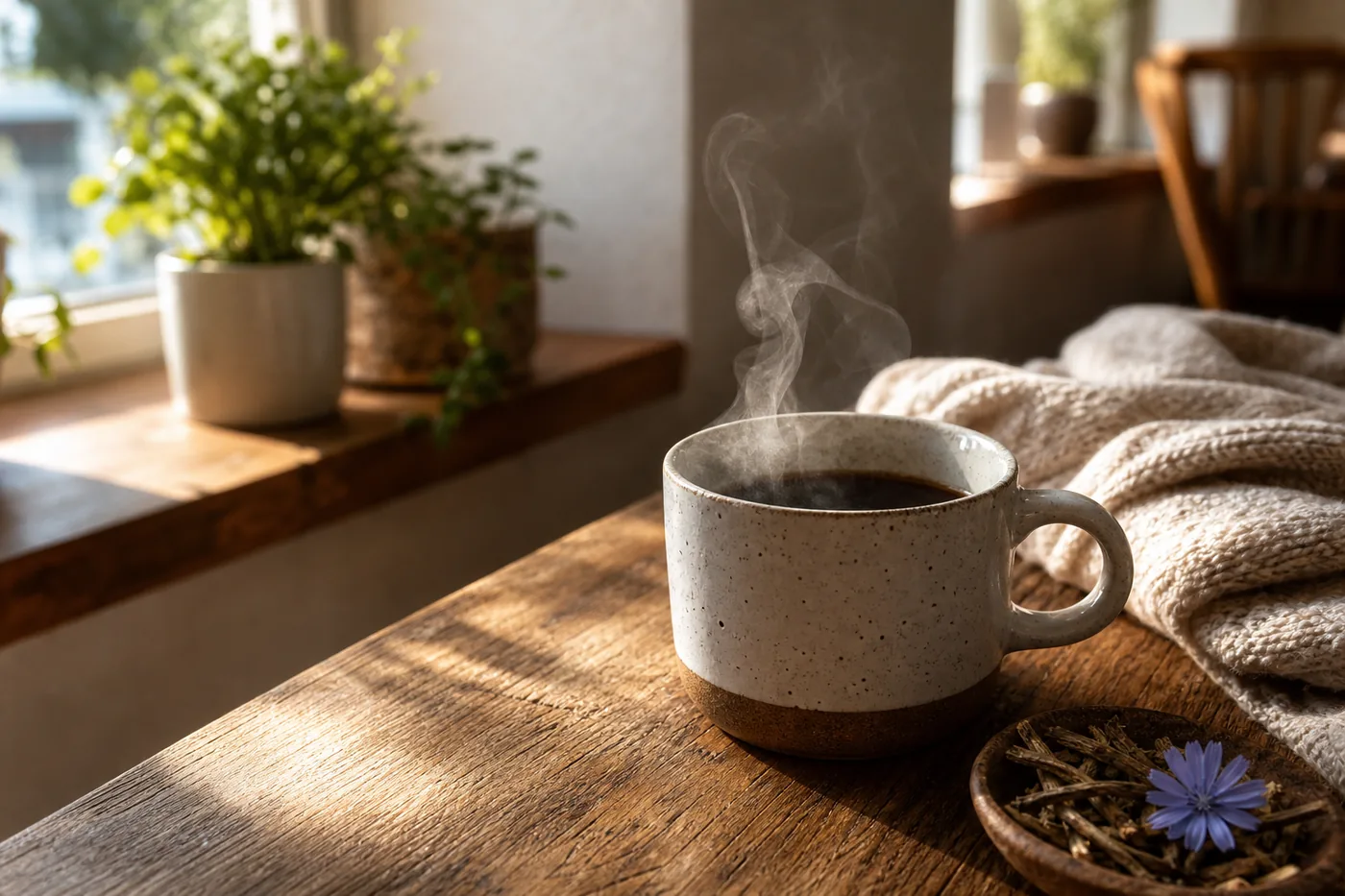
1. Chicory or roasted barley “coffee”
Same mug habit, zero caffeine. Best swap when the problem is the evening espresso, not the morning one.
2. Decaf (small residual caffeine)
Much lower load than regular coffee — not zero. Fine for many people later than a full espresso; still test it if you are very sensitive.
3. Cacao / hot chocolate
Theobromine is milder than caffeine for most people. It is a different stimulatory profile, not a 1:1 coffee clone.
4. Skip the drink: morning light + short walk
Often better than chasing a “healthy coffee.” Outdoor light soon after waking plus a 10-minute walk raises alertness without borrowing deep sleep at night. Pair with protein at breakfast if you want a cleaner energy experiment.
What usually still contains caffeine
- matcha / green tea
- yerba mate
- many “mushroom coffees” (check the label)
Those can be great earlier in the day. They are weak sleep substitutes.
A simple 7-day test
- Keep wake time fixed.
- Enforce an 8-hour caffeine cutoff.
- Replace one afternoon coffee with chicory or a walk + light.
- Log: sleep latency, night awakenings, morning alertness.
Change one variable at a time. If sleep improves, keep the cutoff even if you still drink coffee in the morning.
Bottom line
Late caffeine is a quiet deep-sleep tax. Cut it 8 hours before bed — and if you miss the ritual, use chicory, careful decaf, cacao, or morning light + walking instead of another espresso.
Want structured sleep / focus / energy protocols? See Accès He4lsy.
Health disclaimer: He4lsy content is educational and not medical advice. Consult a qualified professional for personal decisions.
Related articles

Ashwagandha KSM-66: Dose, Cortisol & Sleep
The main benefits of KSM-66 ashwagandha for stress, cortisol, sleep, and steady energy — plus a simple 600 mg protocol.
Ashwagandha Morning vs Evening: When to Take It
Should you take ashwagandha in the morning or evening? How KSM-66 timing fits stress, sleep, and a rhodiola morning stack.
Best Caffeine-Free Coffee Alternatives for Sleep
Chicory, barley, cacao, and other caffeine-free coffee swaps that keep the ritual without taxing deep sleep.