
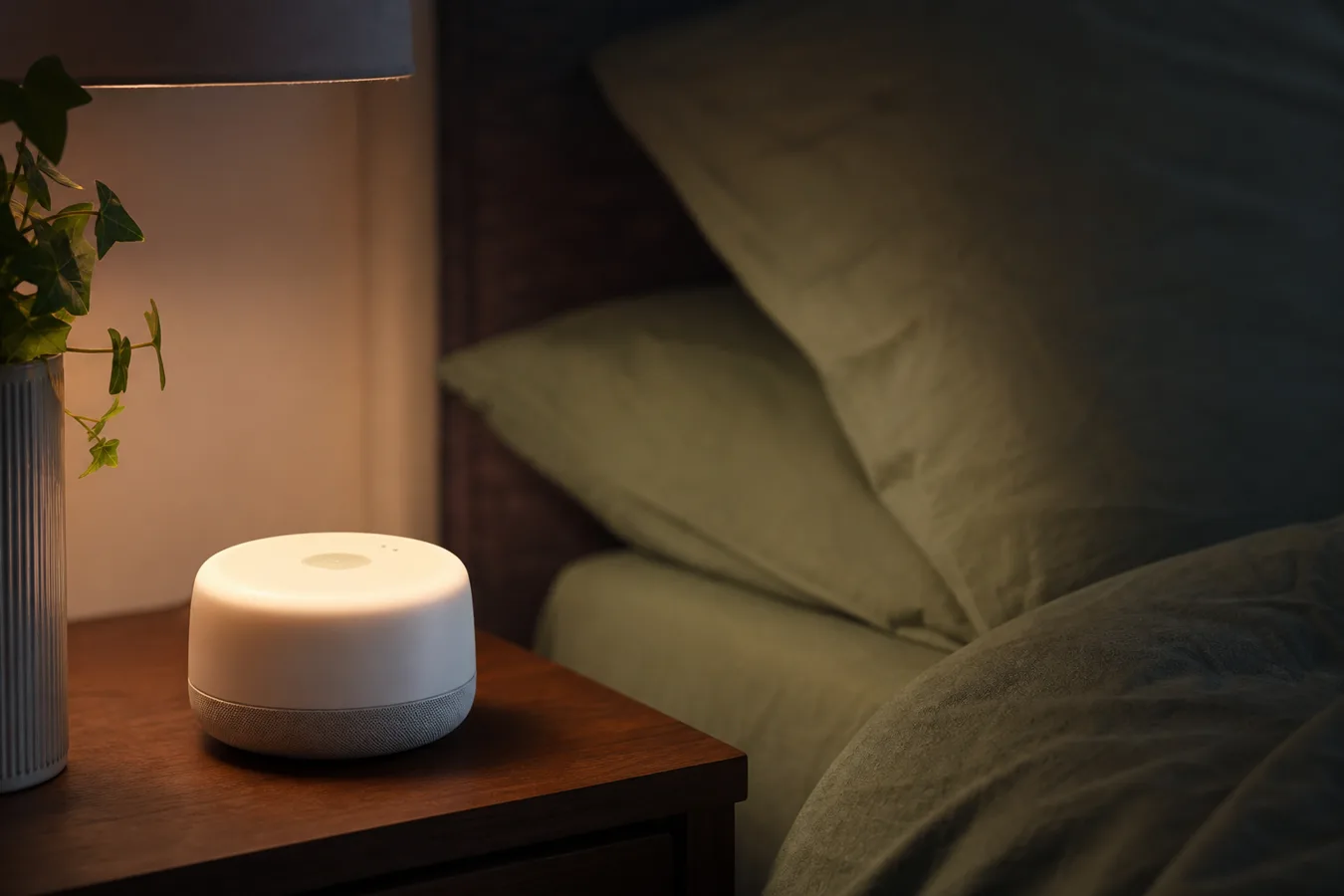
White Noise vs Pink Noise for Sleep
White noise vs pink noise for sleep: what differs, who each may suit, and how to test volume and timing without wrecking your nights.
Traffic, neighbors, and a partner’s snoring can fragment sleep even when you “feel fine.” Steady sound — white noise or pink noise — is a practical mask, not a medical treatment.
White noise vs pink noise
- White noise spreads energy evenly across audible frequencies. It can sound hissier (like static).
- Pink noise emphasizes lower frequencies a bit more. Many people describe it as deeper or softer (more like rainfall).
Neither is universally “better.” Preference and environment decide.
When sound masking helps
Good candidates:
- irregular street noise
- thin walls
- travel / hotel sleep
- light sleepers startled by sudden sounds
Less helpful alone:
- untreated sleep apnea
- anxiety-driven insomnia without a wind-down plan
- tinnitus that worsens with certain spectra (individual)
How to test for seven nights
- Pick one spectrum (start with pink if white feels harsh).
- Set volume modestly — you should still hear a soft voice nearby.
- Start playback at lights-out; keep it continuous.
- Log awakenings and morning freshness.
- Switch spectrum in week two only if week one felt irritating.
Devices vs apps
A dedicated machine avoids phone notifications. Fans are free and effective for many. Apps work for travel if you enable offline audio and airplane mode.
Bottom line
Choose the sound that disappears into the background. Consistency and safe volume beat audiophile debates.
Health disclaimer: He4lsy content is educational and not medical advice. Consult a qualified professional for personal decisions.
Related articles

10 Techniques to Quit Smoking (That Beat Willpower Alone)
Ten practical techniques to quit smoking — triggers, craving drills, sleep, identity lines, and a relapse plan. Plus a member Quit protocol if you want the full 14-day sequence.

Cold Exposure for Recovery: What Actually Helps
Cold plunges, showers, and ice baths for recovery — what the evidence supports, timing mistakes, and a simple protocol to test safely.
HRV Biofeedback for Recovery: A Practical Guide
How heart-rate variability (HRV) and simple biofeedback help you decide when to push or rest — without obsessing over every morning score.