
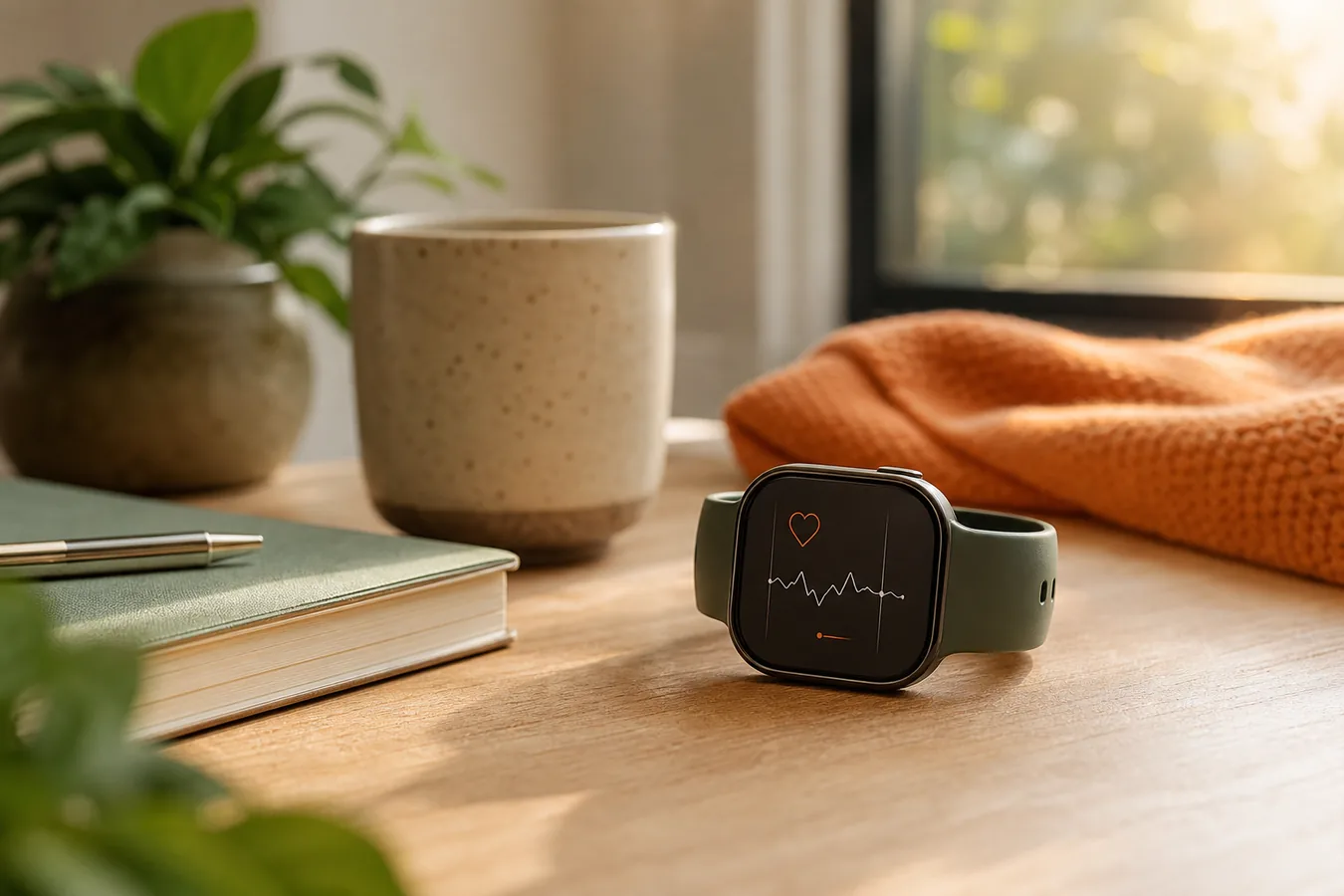
HRV Biofeedback for Recovery: A Practical Guide
How heart-rate variability (HRV) and simple biofeedback help you decide when to push or rest — without obsessing over every morning score.
HRV (heart-rate variability) is a biohacking favorite because it turns “I feel wrecked” into a number. The trap is treating one noisy morning score like a doctor’s note.
What HRV is telling you
HRV reflects beat-to-beat variation, often used as a rough window into autonomic balance. In recovery contexts, people watch trends: sleep debt, alcohol, illness, and hard blocks often pull HRV down relative to your baseline.
A sane measurement routine
- Use the same device and timing (e.g. overnight average, or a 1–2 minute morning reading).
- Build a personal baseline for 10–14 days before reacting hard.
- Act on clusters: 2–3 low days plus poor sleep or illness — not a single dip after one late night.
- Pair the number with symptoms: resting heart rate, mood, and workout RPE.
Simple biofeedback you can do today
You do not need a lab. Slow nasal breathing (roughly 5–6 breaths/minute for 5–10 minutes) is a classic HRV-style practice. Sit, soften the belly, and keep the exhale unforced. Many people feel calmer before bed or between meetings.
Decisions, not dogma
| Signal | Possible action |
|---|---|
| HRV down + high fatigue | Keep Zone 2 / skill work; skip max intensity |
| HRV down but you feel great | Recheck measurement; don’t invent illness |
| HRV steady + poor sleep | Fix light, caffeine, and bedtime first |
Bottom line
HRV is a compass for load management, not a personality test. Consistency of measurement beats chasing the highest score on social media.
Health disclaimer: He4lsy content is educational and not medical advice. Consult a qualified professional for personal decisions.
Related articles

10 Techniques to Quit Smoking (That Beat Willpower Alone)
Ten practical techniques to quit smoking — triggers, craving drills, sleep, identity lines, and a relapse plan. Plus a member Quit protocol if you want the full 14-day sequence.
Cold Exposure for Recovery: What Actually Helps
Cold plunges, showers, and ice baths for recovery — what the evidence supports, timing mistakes, and a simple protocol to test safely.
White Noise vs Pink Noise for Sleep
White noise vs pink noise for sleep: what differs, who each may suit, and how to test volume and timing without wrecking your nights.